

Giant Inflatable Rentals
Two story slides, hundred foot obstacle runs, and inflatables you can see from the next block. When the event calls for a headliner, this is the page, and delivery is included in all 50 states.
Check Availability See PricingWhy size is a strategy, not a splurge
There is a moment at every large event when a guest decides, within about ten seconds of arriving, whether this thing was worth showing up for. Giant inflatables exist to win that moment. A twenty seven foot slide visible from the parking lot, an obstacle course stretching the length of a soccer field, a bounce castle the size of a small house: these are not just rides, they are announcements. They tell every arriving family that today is a real event, and that first impression changes how people move, how long they stay, and what they post afterward.
But the case for giant inflatable rentals is practical as much as theatrical. Big units process big crowds. A standard bounce house serves ten to fifteen kids at a time, while a giant unit doubles that, and a hundred foot obstacle course moves a continuous stream of racers from start to finish all afternoon. For schools, festivals, and corporate family days, the math is simple: fewer, larger attractions often entertain more guests with shorter lines than a scatter of small ones, while looking dramatically better doing it. When organizers ask us how to make a fixed budget feel bigger, going taller is almost always part of the answer.
There is also the memory factor, which is harder to measure but impossible to miss. Ask any adult about the best school carnival of their childhood and they will describe the biggest thing there. Giants imprint. A child who conquers a two story slide at seven retells that story at dinner for a week, and the school that brought it becomes the school that does the cool stuff. Institutions understand this instinctively, which is why the same giants get rebooked by the same organizations year after year, often before our crew has finished packing the truck from this year’s event.
Every giant unit we deliver is commercial grade, sanitized, inspected at setup, anchored for its size class, and covered by our liability insurance, with delivery, setup, and pickup included in one price through local crews in all 50 states. Giants are the top shelf of our inflatable rentals lineup, and they pair with everything else we carry, from interactive games to standard bounce units for the younger crowd.
The giant lineup
Giant slides
Eighteen to twenty seven feet of climb and drop, in dry and water configurations, single and dual lane. The most photographed units we own and the anchor attraction at every festival that books one. Dual lanes add racing, which doubles the throughput and the noise.
Mega obstacle courses
Fifty to one hundred feet of tunnels, climbs, squeeze walls, and slide finishes, run as head to head races. The undisputed king of field days and team events, moving hundreds of participants an hour when lines are managed well.
Oversized bounce castles
Double and triple the standard footprint, with interior obstacles and basketball hoops. Built for events where the bounce line would otherwise never end, and impressive enough to headline on their own at big birthdays.
Giant interactive games
Supersized versions of the games crowd favorites, from big board soccer darts to multi player wrecking balls. See the full roster on our interactive games page, then ask which come in giant.
The rule of thumb for big events: one giant headliner plus two supporting units beats five medium attractions, on lines, on photos, and usually on price.
Planning for a giant: space, power, access
Giant units demand real logistics, and this is where a professional crew earns its keep. Footprints run from thirty to over a hundred feet long, heights demand open sky clear of branches and wires, and anchoring scales with size: more stakes in grass, serious ballast on hard surfaces. Power planning matters too, since the biggest units run multiple blowers, and park settings often need generators, which we supply.
Access is the step most first time organizers miss. A giant inflatable arrives on a hand truck through gates and around corners, so we confirm the path from truck to setup spot before your date, not during it. Send us photos or a rough sketch of your venue and our local crew will plan the layout, the power, and the route in one conversation.
Where giants earn their keep
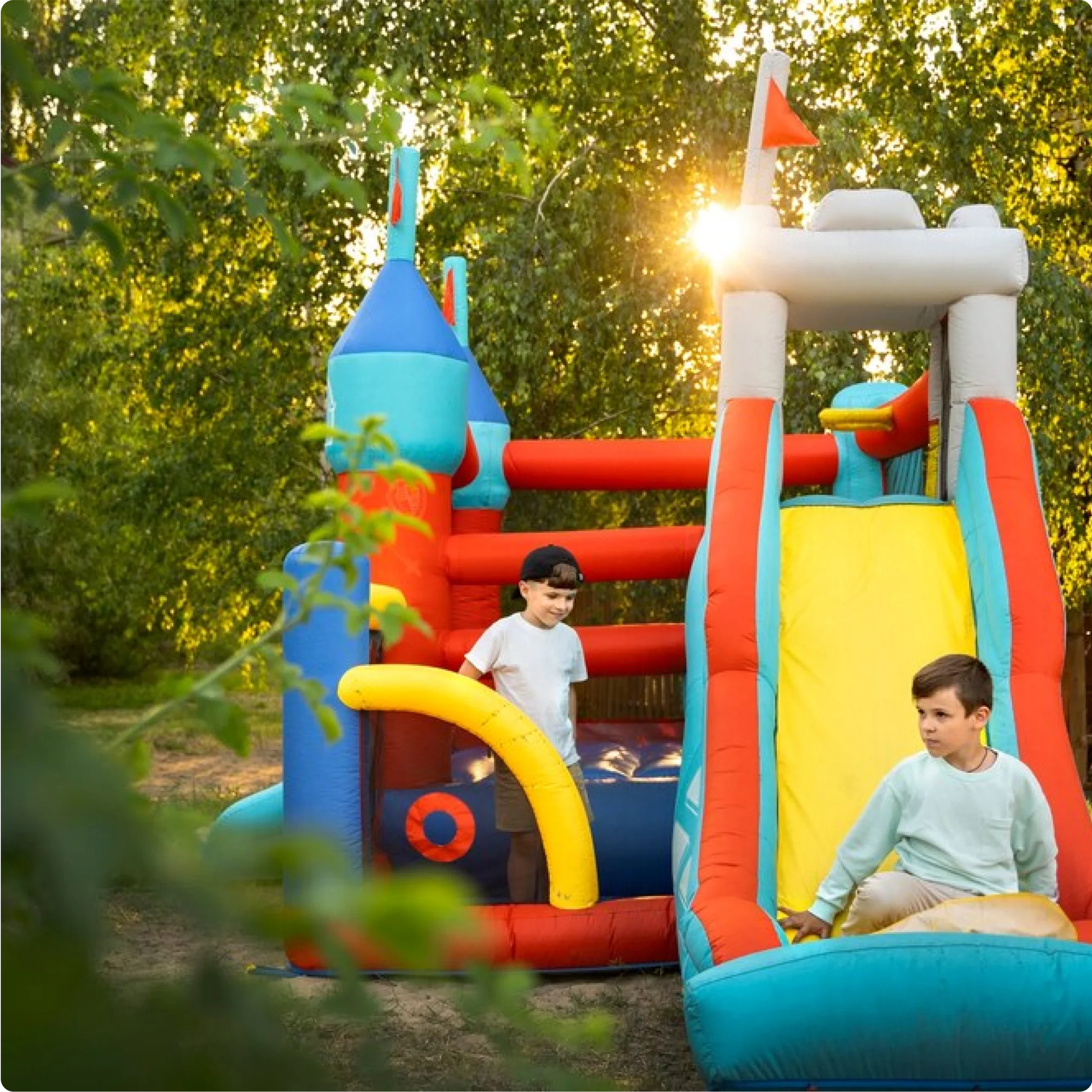
School field days are the classic giant booking: one mega course plus a giant slide can carry an entire day’s rotation for several hundred students. Church and community festivals use giants as their midway anchor, the landmark attraction every flyer features. Corporate family days book them because nothing says the company went all out like a two story slide on the office lawn, and graduation blowouts lean on giants to entertain teens who consider themselves far too old for a regular bounce house, right up until the racing starts.
For guest lists over a hundred, we almost always quote a giant anchored package first, because it solves entertainment, photography, and crowd flow in a single decision.
Building a giant anchored event plan
The most effective large events we serve follow a simple architecture: one giant as the gravitational center, two or three supporting attractions arranged around it, and clear walking lanes between them. The giant draws guests in and sets the energy, while the supporting units, a standard bounce house for the youngest kids, a quick turn interactive game, maybe a concessions table, absorb the overflow and give every age group a home. This hub and spoke layout beats a row of equal sized units because it creates a natural center to the event, and people instinctively organize around a center.
Scheduling around a giant matters too. For school field days, we recommend running the mega course as a timed rotation so every class gets a guaranteed window, then opening it to free play in the final hour, which rewards the kids who stayed and prevents the day from peaking too early. Festivals do the opposite: open the giant immediately, because it is the reason half the crowd came, and let the line itself become part of the spectacle. Corporate events benefit from a tournament structure on the giant, with heats through the afternoon and a final that the whole picnic gathers to watch. Tell us the shape of your day and our crew will suggest the flow that fits it, because after hundreds of giant deployments, we have seen which schedules sing and which stall.
One more planning note: give the giant the best ground. Flattest area, firmest surface, clearest sky. Every other attraction can flex around it, but the headliner earns the prime real estate, and the whole event photographs better when it gets it.
Giants, sponsors, and fundraisers
For schools, churches, and nonprofits, the giant is not just an attraction but a fundraising asset, and organizers who treat it that way routinely run their entire event at a profit. The logic is straightforward: the biggest inflatable at the event is also the most visible advertising surface on the grounds, and local businesses pay real money to be associated with the thing every child talks about for a week. A banner on the mega course, a named slide sponsorship in the event program, a logo on the wristbands that grant unlimited rides: we have watched parent teacher organizations cover the full rental cost with a single sponsor call and pocket the ride ticket revenue on top.
Ticketing the giant works because demand is genuinely high. A wristband model, one price for unlimited runs, keeps lines friendly and revenue predictable, while per run tickets maximize takings at shorter events. Pair the giant with two or three quick turn games from our interactive lineup and the midway practically staffs its own cash flow, with volunteers rotating between stations. If your event has a fundraising goal, mention it when you book. Our local crews have seen dozens of these events run well and badly, and the layout and pricing advice they will give you over one phone call is the kind that separates a break even carnival from a record year.
Giant safety is a different discipline
Everything about safety scales with size. Wind that a ten foot bounce house shrugs off is a real force on a twenty seven foot slide, which is why giant units carry stricter wind ratings and our crews monitor conditions actively on gusty days, pausing operation when readings approach the limit rather than after. Anchoring is engineered per unit, with stake counts and ballast weights matched to the manufacturer’s specification for the size class, never eyeballed. Rider flow matters more too: taller platforms mean enclosed climb lanes, trained spacing at the top, and clear landing zones that our setup layouts protect by design.
This is also the category where operator quality separates most sharply. Any weekend operator can run a small castle acceptably; a giant demands proper equipment, current inspections, adequate insurance, and a crew that has set the unit up dozens of times. Ask any company quoting you a giant how many times their crew has deployed that exact unit, whether their insurance covers that size class, and what their wind protocol is. We welcome those questions in every market we serve, because the answers are the product. Our full approach to inflatable safety, weight limits, and supervision lives in our bounce house rentals guide, and giant bookings get an extended version of the same on site briefing.
Giants through the seasons
The giant calendar has a distinct rhythm worth planning around. Spring belongs to the schools: April and May field days book the mega courses solid, and any district event planner who waits until spring break to reserve is choosing from leftovers. Early summer shifts to graduations and community kickoff events, where giant slides, wet where the climate allows, carry block parties and park festivals. High summer is water territory, and the giant water slides become the most contested inventory in every southern market, with the tall dry slides picking up the venues that cannot run water.
Then comes the fall crunch, the single busiest giant season in most of the country. Late September through Halloween stacks church festivals, school carnivals, harvest events, and trunk or treat nights into six frantic weekends, and the tall units disappear from calendars a month out. Winter, far from being dead, moves the action indoors: gyms, field houses, and event halls host giants all season, ceiling height permitting, and indoor winter bookings often get the best availability and the most scheduling flexibility of the year. Wherever your event lands, the rule scales with the unit: the bigger the inflatable, the earlier the reservation, and a month of lead time is never wasted on a headliner.
What giant inflatables cost
Giants occupy the top of the pricing board, typically four hundred to seven hundred dollars and up for a standard day depending on the unit and market, with the very largest festival pieces quoted case by case. That number is all inclusive as always: delivery, a crew sized for the unit, full setup and anchoring, safety inspection, and teardown. Relative to what they replace, giants price well. One six hundred dollar mega course frequently outperforms three two hundred dollar units on throughput while consuming one delivery fee and one power plan, and sponsors love putting their banner on the biggest thing at the event, which is how many schools and nonprofits net their giant for free.
The booking calendar is unforgiving at this size because most markets stock only a handful of true giants. Spring field day season and September and October festival season are the crunch windows, and a month of lead time is the realistic standard for first choice units. Our inflatable rental prices guide covers the full category breakdown, and our package guide shows how a giant anchored bundle stacks up against buying attractions piecemeal.
Frequently asked questions
How much space do I need for a giant inflatable?
Plan on footprints from thirty feet for oversized castles to over a hundred feet for mega obstacle courses, plus clearance on all sides and open sky above. Send us your venue dimensions or photos and we will confirm what fits safely before you book anything, including the truck route from parking to the setup spot.
Do giant inflatables need special power?
The biggest units run two or more blowers, each needing a standard circuit, and park venues usually call for generators, which we supply. Power planning is part of every giant booking, so you will never discover a shortfall on event day.
Can giants be set up at public parks?
Usually yes, with the venue’s permit and certificate of insurance requirements handled in advance, which our local crews do routinely. Parks are actually ideal giant venues thanks to open space and sight lines, and our crews coordinate directly with park offices on load in windows, power access, and any inspection the venue requires.
Are giant inflatables safe in wind?
Every giant carries a manufacturer wind rating, and our protocol pauses operation as conditions approach it, not after. Anchoring is engineered per unit and size class. On a properly run site, giants have an excellent safety record.
Related resources
Make your event visible from space
Or at least from the parking lot. Tell us your venue and headcount and we will quote a giant that fits, with delivery, setup, power planning, and every other logistic handled by your local crew.
Quote My Giant